
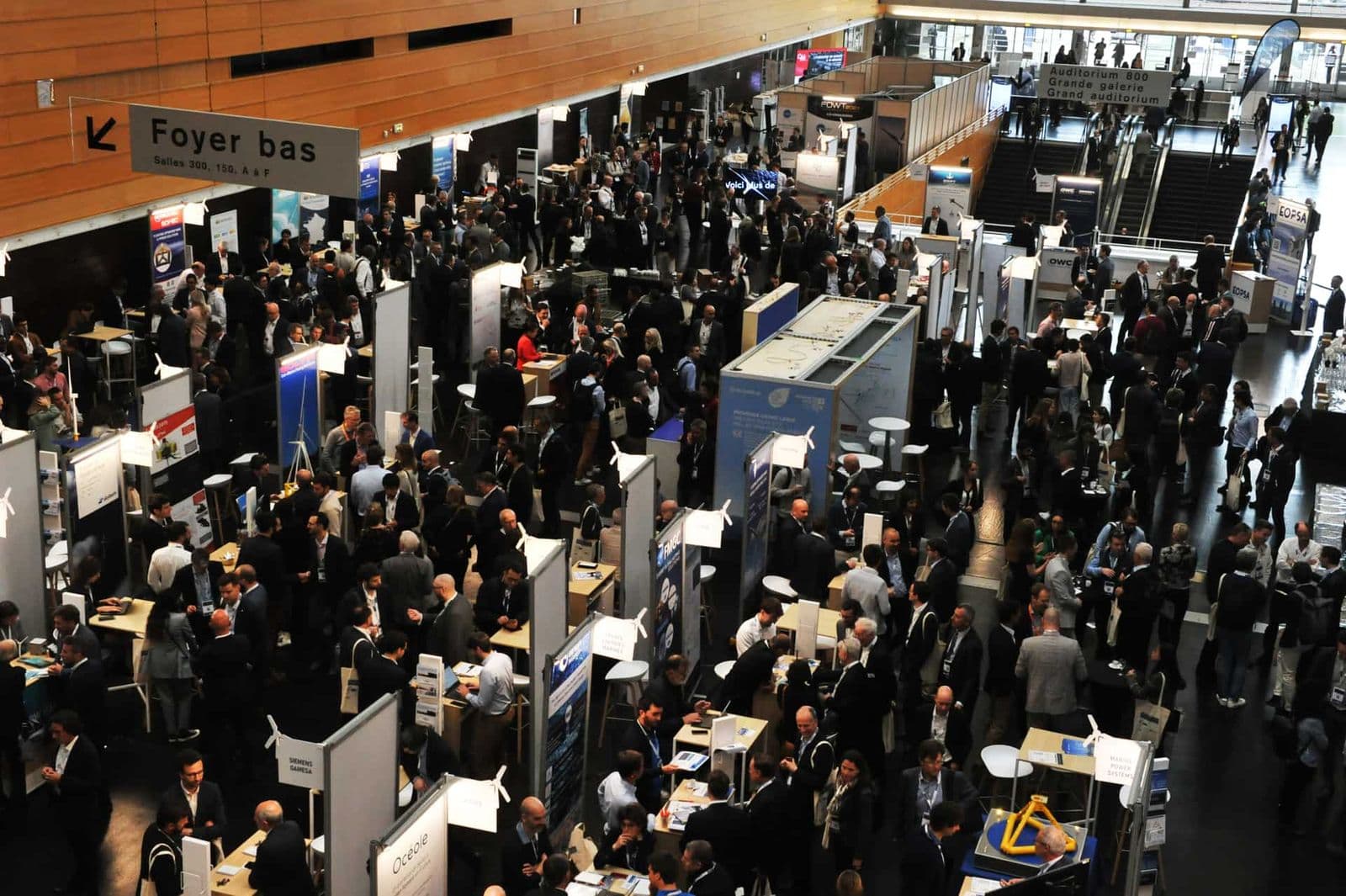
The following article is a contribution by Bruno Geschier, the Chairman of WFO’s Floating Offshore Wind Committee and the Chairman of FOWT’s Scientific and Technical Committee.
Floating offshore wind stands at a pivotal juncture in its evolution. In just over a decade, it has progressed from an intriguing engineering concept to a strategic pillar of global energy transition strategies. Governments are integrating it into national roadmaps, investors are allocating capital to large-scale projects, and industrial players are scaling up capabilities to meet anticipated demand. The sector is rich with promise, vast untapped wind resources, technological innovation, industrial revitalization and meaningful decarbonization potential.
Yet the very scale of this promise underscores a critical truth: floating offshore wind must be built on professionalism, technical rigor and disciplined collaboration. There is no room for amateurism in a capital-intensive industry that operates in some of the most demanding environments on earth.
The core rationale for floating offshore wind is both simple and transformative. A substantial share of the world’s strongest and most consistent wind resources lies in waters too deep for fixed-bottom foundations. Traditional offshore wind has flourished in relatively shallow seas, but beyond those zones lies an immense energy frontier. Floating platforms, whether semi-submersible, barge-type, spar-buoy or TLP designs, enable turbines to operate in deep waters, expanding offshore wind’s geographic reach and unlocking high-capacity factors previously inaccessible.
This shift has profound implications for countries with steep continental shelves or limited shallow seabed. Japan, with constrained land availability and significant energy import dependence, views floating wind as central to strengthening its renewable portfolio. Norway draws upon decades of offshore oil and gas engineering expertise to pioneer advanced floating structures and mooring systems. The United States sees floating wind as essential for harnessing the powerful winds off the Pacific Coast, where water depths quickly exceed fixed-bottom limits. Meanwhile, France, Scotland and other geographies are integrating (or are planning to integrate) floating projects into their broader offshore wind strategy, leveraging maritime know-how and port infrastructure.
